The Mark Beneath the Glaze
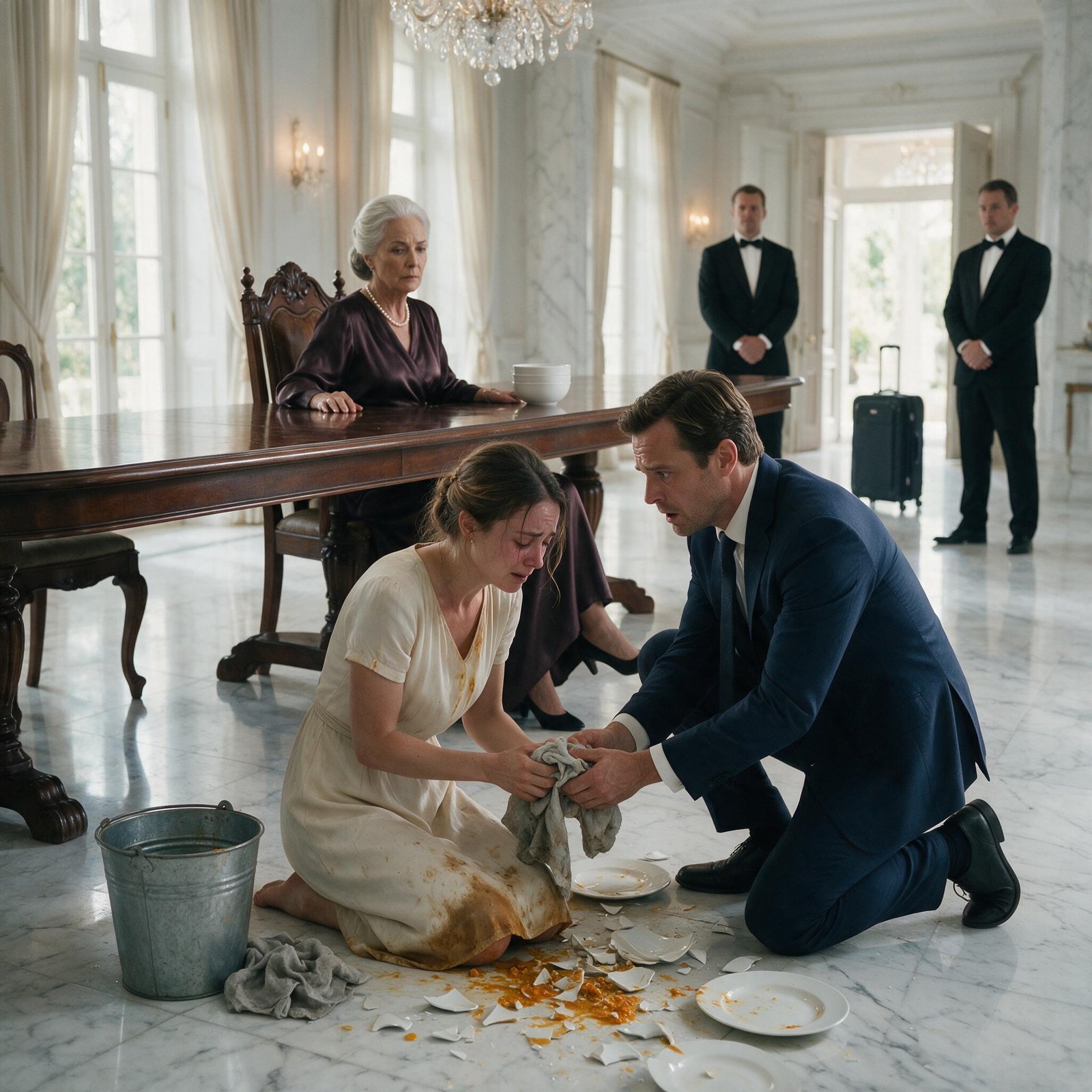
Forty-eight minutes later, Emma Carver sat in an airport hotel and watched warm water darken the cloth around her dusty fingers.
Daniel had reserved two connecting rooms, given her the bedroom key, and left the connecting door open as far as she requested.
The arrangement made her safer without making the dining hall feel distant.
Daniel's upright suitcase stood near the hotel door, still wearing the airline tag from the trip that had kept him away for nineteen days.
He sat in the farthest chair with both hands on his knees.
“May I get you another cloth?”
Emma shook her head because the water was clean and because she was not ready to let usefulness become his way around the conversation.
Daniel accepted the refusal without moving closer.
“I came home early because a meeting was canceled, not because I understood what was happening to you.”
During the trip, Emma had twice said that Margaret's rules were becoming unbearable, and Daniel had answered that his mother became difficult before important dinners.
On the third call, he had asked Emma to keep the peace until he returned.
“You heard me, Daniel, but you kept translating my words into something easier.”
He lowered his eyes.
“I did.”
“Leaving that house with me was right, but it does not decide what happens to our marriage.”
Daniel's face tightened, and he nodded without asking her to soften the boundary.
“I know.”
Emma unwrapped the cloth and flexed fingers stiff from cold water and fear rather than injury.
The cleaning had begun before noon in a hall already covered with used plates, dried sauce, and crumbs from a meal Emma had not attended.
Arthur Cole and Thomas Reed were the only two employees in the room, with Arthur near the tall windows and Thomas near the service door.
Neither exchanged a signal, raised a phone, touched the stacked bowls, or approached the table before Margaret lifted one.
Their silence hurt, but separate discomfort did not make them conspirators.
Margaret had ordered both back and said a Carver wife should prepare the family table herself.
Margaret claimed the Carver Foundation dinner in three days would display the bowl as the family's most valuable heirloom.
She described it as the centerpiece of an appeal to close one scholarship student's tuition gap by Friday.
Emma kept cleaning because walking away felt like abandoning a student whose name Margaret never supplied.
Emma explained that she had noticed the underside of the bowl that morning while she was setting the service out along the dining table for the rehearsal.
The mark beneath the glaze was a crisp blue oval reading Briar and Finch, followed by the date 2021 in evenly printed numerals.
Emma had told Margaret she would not describe the service as century-old until its provenance was clear.
Emma had assumed it was a reproduction until Margaret called it priceless.
Daniel said he remembered his grandmother's Sunday bowl as warmer and deeper, with a hand-painted gold line at the rim instead of the flat printed border on the bowl Margaret had thrown.
It had also carried a pale crescent repair below one handle, where his father once knocked it against a sink.
The bowl Margaret threw had possessed no handle, repaired crescent, or faded gold.
“Could there have been two?”
“There could have been.”
Daniel remembered hearing about a sudden shortfall in the foundation's education fund before his flight, although Margaret had dismissed it as a temporary tuition problem that the dinner in three days would solve.
Emma felt anger rise, then settle into something colder when she remembered the deliberate arc of Margaret's arm.
Margaret had taken the bowl from the stack at her elbow, laughed, aimed beside Emma, and released it with enough force to scatter porcelain across the floor.
The mansion could wait until neither of them was using a mystery to avoid what had already happened in plain sight.
No mark beneath any glaze could excuse those choices.
Emma closed the connecting door until only a hand's width remained, and Daniel stayed in his chair on the other side.
If Margaret truly believed that bowl was priceless, why had she been the one who deliberately destroyed it?